
Introduction
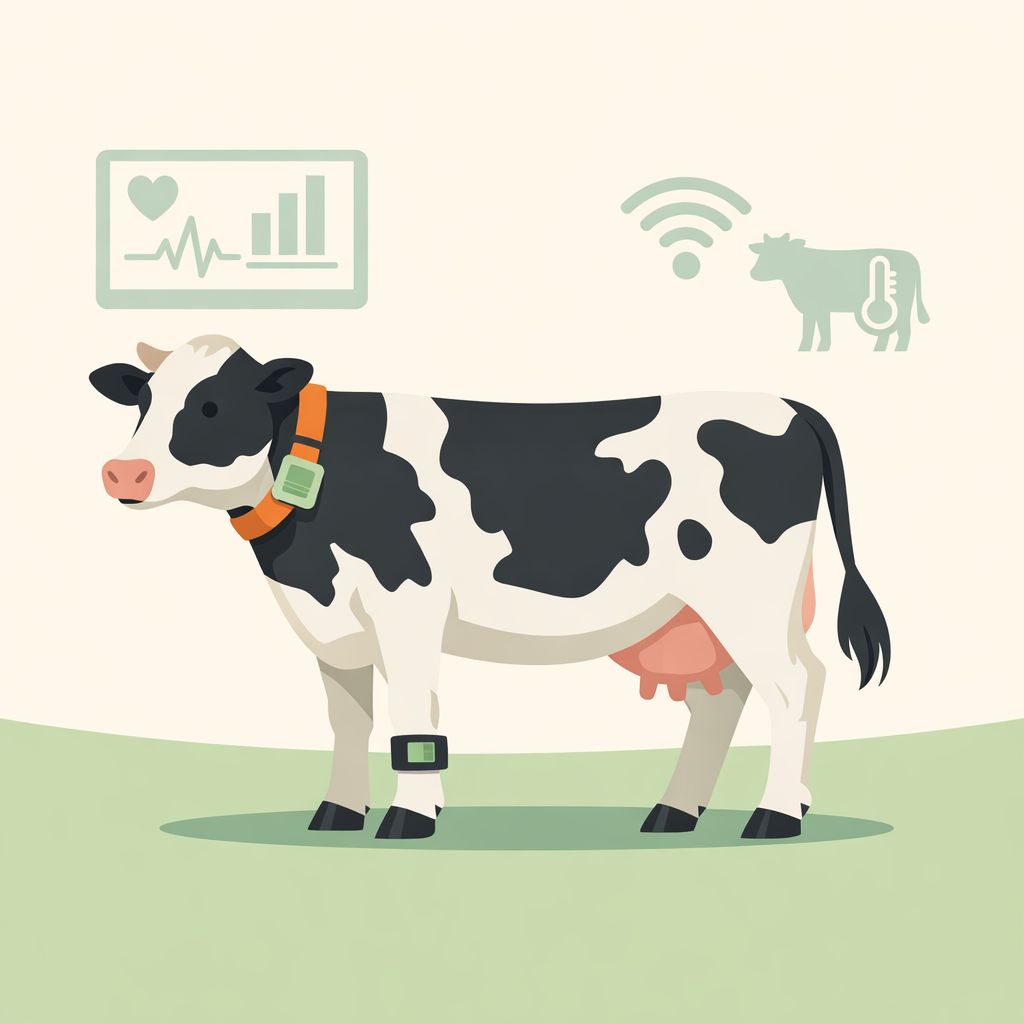
Good stockpeople have always watched their animals closely — appetite, movement, breathing, social behaviour, and small changes that come before obvious illness. Precision livestock farming does not replace that eye. It supports it with measurement: identification, weights, milk or egg records, activity and rumination sensors, cameras, and environmental monitors that notice change early and keep a record you can act on.
The value is practical, not futuristic. Catching a health problem a day earlier can mean a cheaper treatment, less production lost, and less suffering for the animal. Feeding by measured need rather than habit can cut waste. Keeping reliable records makes breeding, buying, selling, and compliance decisions clearer. Started in the right order, precision livestock farming can begin with low-cost tools on almost any unit.
1. Start with identification and records you can trust
Every precision system depends on knowing which animal is which. Before buying sensors, make sure individual identification is consistent — ear tags, management numbers, or electronic ID where your system uses it — and that births, movements, treatments, breeding, and deaths are recorded against that ID promptly and in the same way every time.
Keep the record simple enough that it actually gets completed: animal ID, date, event, product or action if any, and who did it. A notebook that is filled in beats a complex app that is not. Once the habit is reliable, digital records add power: you can sort by group, spot animals with repeat problems, check withdrawal periods before sale or milking, and see whether a change you made actually improved results.
Review records weekly, not only when there is a crisis. Look for repeat treatments, poor growers, late calvers or layers that have fallen off, and groups that consistently need more feed for the same output. Those patterns are where money and welfare are won or lost.
2. Monitor health daily — and let data flag the exceptions
Daily observation remains essential: check that animals are eating and drinking, moving normally, breathing without effort, and showing normal dung, milk, eggs, or behaviour for their type and stage. Precision tools help by watching continuously and flagging the exceptions for a closer human check.
Depending on species and budget, useful tools include activity and rumination collars or ear sensors for cattle, automated milk yield and conductivity recording for dairy animals, weigh platforms, water-flow monitors that reveal a pen drinking less than usual, and temperature and ventilation monitors in housed units. Cameras can help observe calving, lambing, or farrowing and check animals at night without disturbance.
Treat every alert as a prompt to examine the animal, not as a diagnosis. Check temperature where appropriate, look for injury or swelling, confirm the sensor is fitted correctly, and compare with pen mates. Record what you found and what you did. An alert with no follow-up record teaches the system — and the team — nothing.
If illness, lameness, mastitis, parasites, or production drops keep recurring, work with your veterinarian on the pattern, not only the individual case. Good data makes that conversation far more useful, because you can show when the problem started, which group it affects, and what changed at the same time.
3. Feed and weigh by evidence, not by habit
Feed is usually the largest cost in livestock production, and small inaccuracies repeated daily become large losses. Group animals by real need — age, weight, stage of pregnancy or lactation, and production level — and adjust rations when those needs change, rather than feeding every group the same because it is convenient.
Weigh a representative sample regularly where weighing all animals is impractical, and track body condition as well as live weight. An animal can hold weight while losing condition in the wrong place, or gain weight without reaching the condition needed for breeding or sale. Compare growth, milk, or egg output against feed used for the same period. If output falls while feed stays the same, investigate health, water, forage quality, and housing before simply adding more feed.
Protect feed and water quality too. Store feed dry and secure from pests, check water troughs daily for cleanliness and flow, and ensure every animal can actually reach feed and water without bullying. Sensors and rations cannot compensate for a blocked drinker or not enough trough space.
4. Control the environment animals actually live in
Animals perform best within a comfort range for temperature, humidity, air quality, and lying or resting space. In housed units, monitor temperature and humidity at animal height, check ventilation inlets and fans, and watch for draughts at animal level in cold weather and heat stress signs — panting, crowding near drinkers, reduced feeding — in hot weather.
Precision here can be simple: max-min thermometers or data loggers, alarms for ventilation or water failure, and a clear action plan when readings go out of range. In pasture systems, the equivalents are shade, shelter, clean water in every paddock, and moving animals before grazing is forced too low or mud damages feet and pasture.
Keep bedding, flooring, and handling areas safe and clean. Slippery floors, sharp fittings, and poorly designed races cause injuries and stress that no app can undo. Walk the unit at animal pace and height periodically and fix what you find.
5. Use breeding and replacement records to improve the herd or flock
Precision livestock farming pays over years through better breeding decisions. Record service or mating dates, pregnancy results, births, mothering ability, survival, and offspring performance against the parents. Over time those records show which families produce animals that grow well, stay healthy, and fit your system — and which lines bring repeat problems.
Select replacements on evidence, not appearance alone: health history, growth or production, temperament and ease of handling, feet and udder or body structure where relevant, and the mother’s record. Cull decisions are also clearer with records: an animal with repeated illness, poor fertility, or consistently low output despite good care is usually costing more than it returns, in money and in management time.
Keep the goal for your unit in front of you — milk, meat, eggs, breeding stock, or a mix — and judge data against that goal. More data is not the aim. Better decisions, made earlier and with less guesswork, are the aim.
6. Start small, prove the saving, then expand
The most common mistake is buying a full system before the basic records and routines are reliable. Start with one problem that costs you money or worry: early illness detection, weighing and growth, milk recording, breeding records, or environmental alarms. Choose one affordable tool or routine, use it consistently for a full cycle, and measure whether it saved labour, treatment, feed, or losses.
Train everyone who works with the animals in the same routine, and write down who checks alerts, who records treatments, and who reviews the weekly summary. Technology that depends on one person will fail when that person is away.
Those management skills can be built step by step. Agritech Institute offers 100% online, self-paced study across 184 courses and five Academies, described on the site as CPD certified and internationally recognised, including precision livestock farming, animal science, IoT sensors and farm data, and agribusiness. Browse the full course list (https://agritech.institute/courses/), explore the Academies (https://agritech.institute/academies/), and see how enrolment works at student enrolment (https://agritech.institute/student-enrollment/).
Frequently asked questions
What is precision livestock farming in simple terms?
It is using identification, records, sensors, and data to manage animals as individuals or well-defined groups rather than by guesswork alone. Examples include weighing to track growth, activity sensors that flag a cow that may be ill or in heat, milk recording, and environmental alarms in housed units. The human stockperson still examines the animal and decides the action.
Is precision livestock farming only for large farms?
No. Large units may use automated systems, but small units benefit from the same principles with low-cost tools: reliable ID, a consistent record book or simple app, regular weighing or condition scoring, and daily health checks recorded the same way. Start with the problem that costs you most, not with the most expensive technology.
Which tool should I buy first?
Buy measurement for your biggest loss first. If illness is caught late, that may be better observation routines and, where they fit, activity or temperature monitoring. If feed is wasted, it may be weighing and grouping. If breeding is uncertain, it may simply be disciplined breeding records. Prove a saving with one tool before adding the next.
Can I learn precision livestock farming online?
Yes. Agritech Institute’s courses are 100% online and self-paced across 184 courses and five Academies, described on the site as CPD certified and internationally recognised, including precision livestock and animal science topics. Start with the course list (https://agritech.institute/courses/) and the Academies (https://agritech.institute/academies/).
Healthier animals, clearer decisions
Precision livestock farming succeeds when it strengthens good stockmanship: identify every animal, record honestly, watch daily, measure what matters, and act early on what the data flags. Do that consistently and animals are healthier, feed and treatment are used where they help most, and the farm’s decisions rest on evidence instead of memory.
If you want to build those skills in depth, explore Agritech Institute’s online, self-paced courses in precision livestock farming, animal science, IoT sensors and farm data, and agribusiness: courses (https://agritech.institute/courses/), Academies (https://agritech.institute/academies/), and student enrolment (https://agritech.institute/student-enrollment/).